Four crafts we treat as headline experiences, three more we add where they fit the route. None of them appear on a standard group-tour schedule, for a simple reason: they depend on personal relationships with the craftsmen, and those take years to build.
Medicine-clay masks & figures — our flagship
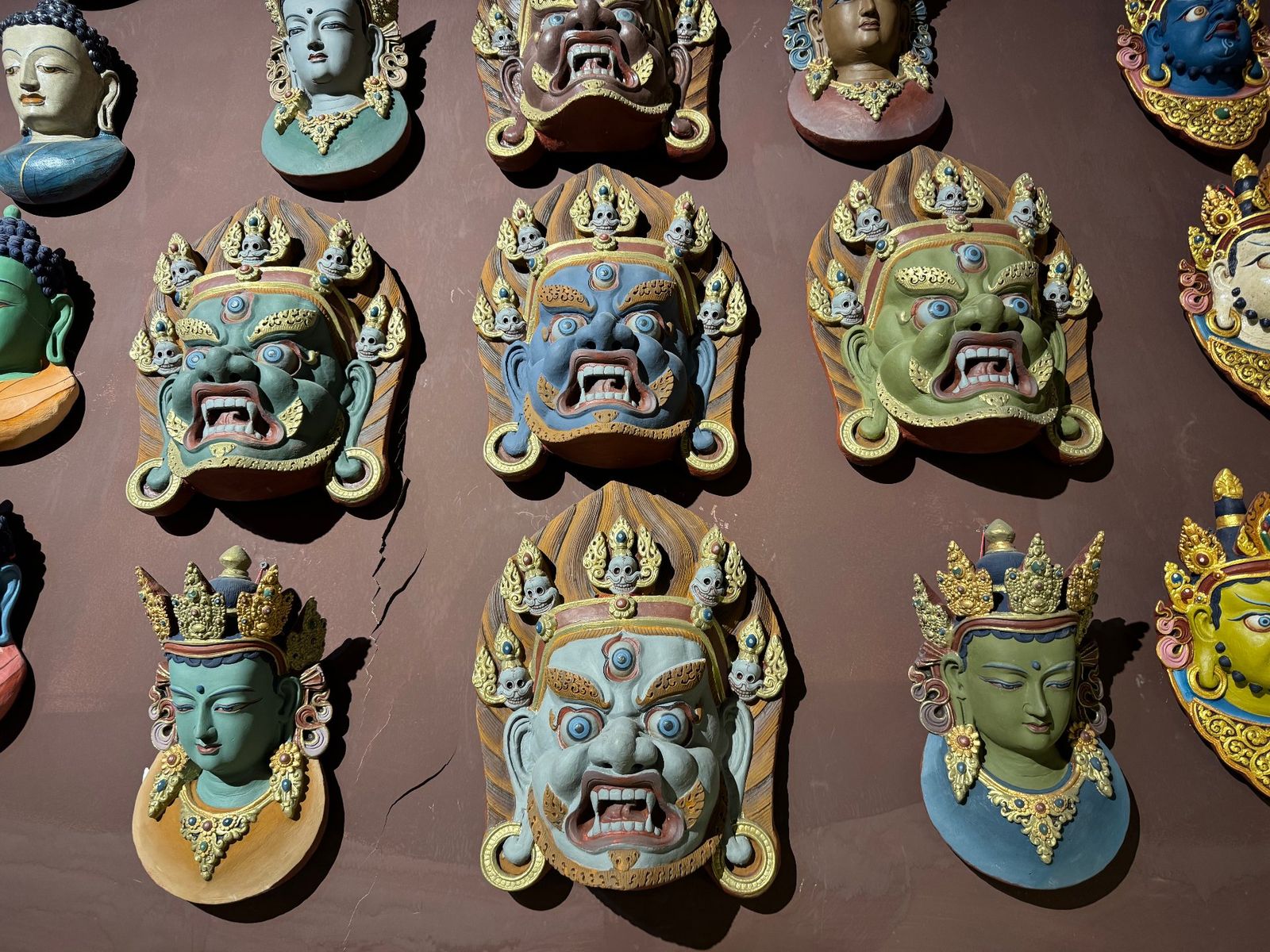
This is the experience we put in front of every traveller who asks "what can we do that nobody else offers?" — and the answer surprises people, because it starts with mud.
Medicine-clay sculpture is a Tibetan tradition going back over a thousand years. The clay is not plain clay: it is mixed with crushed Tibetan medicinal herbs and, for important pieces, with precious materials — coral, turquoise, pearl, dzi beads, gold and silver dust. Tradition counts more than eighty ingredients. The finished masks and figures were made for temples and for household shrines, and the herbs and gems in the clay are not decoration; they carry the piece's blessing purpose. A mask on your wall is, in the tradition, not a souvenir but a presence.
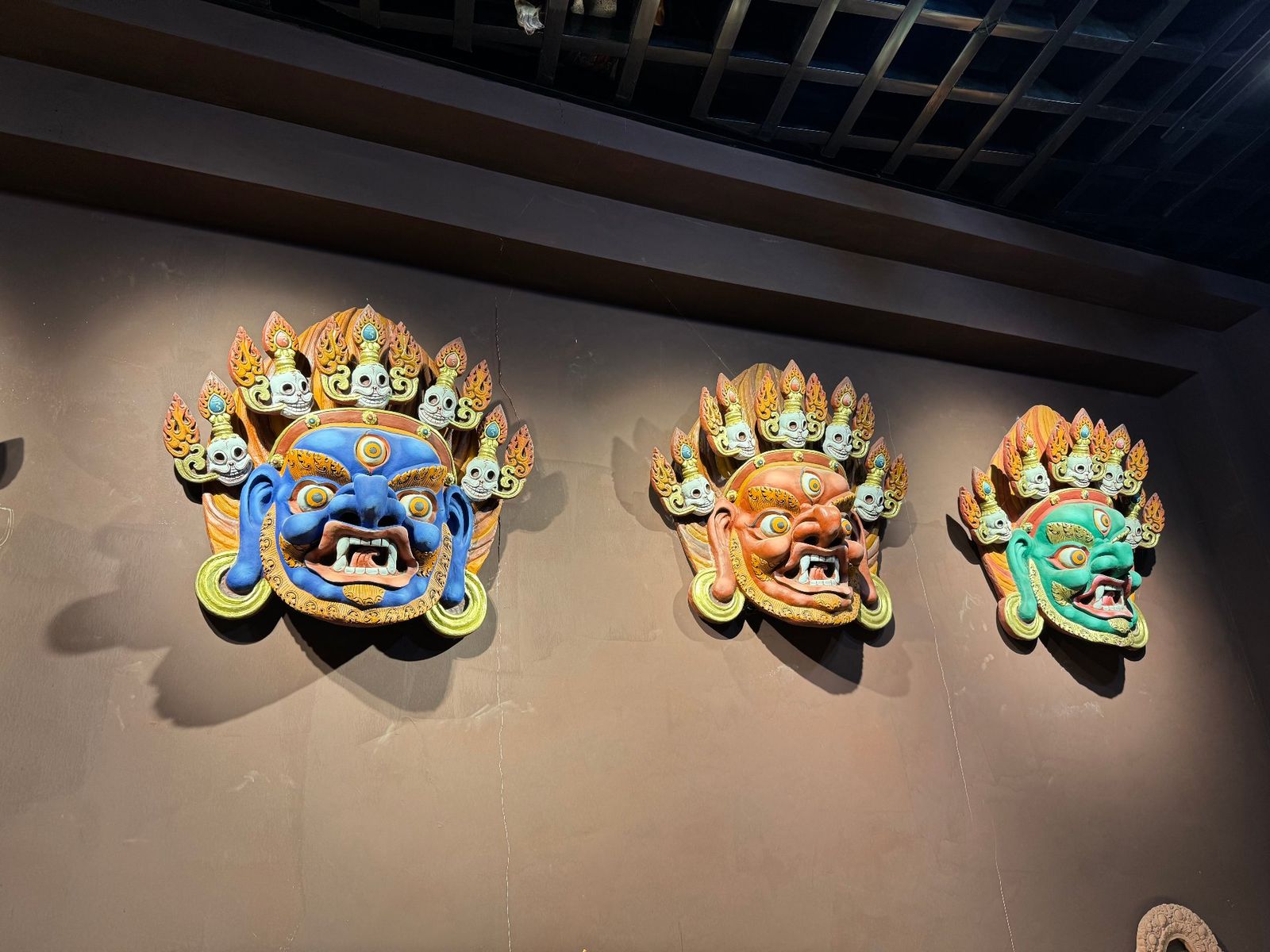
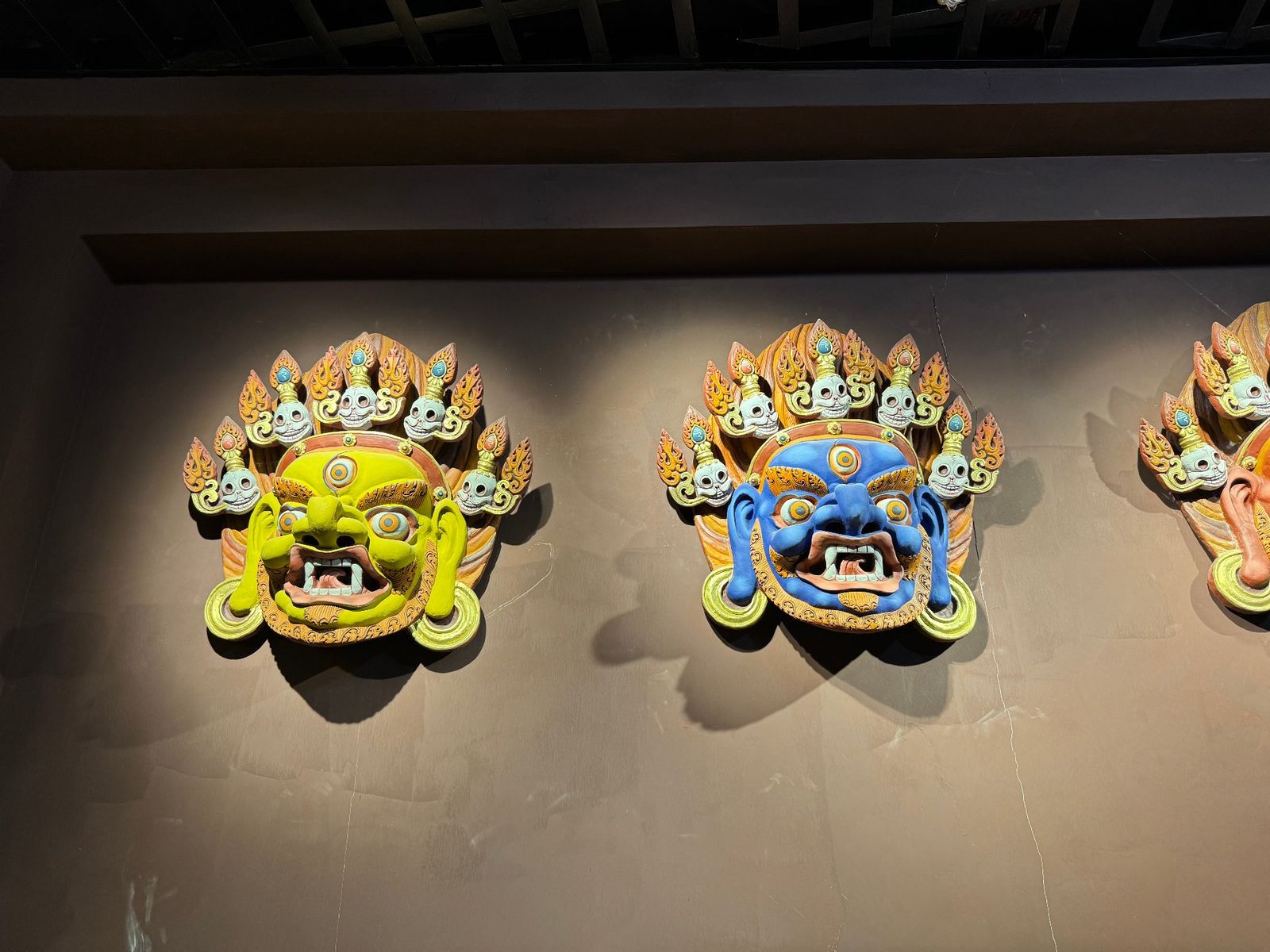
In the session, a craftsman whose family has done this for three generations walks you through the materials first — you will handle the raw herb mixture and see the crushed mineral additions before any shaping starts. Then you make your own piece: a small figure for younger guests, a simple mask if you want the full challenge. It takes half a day if you want to do it properly, and you carry the piece home dried and packed.
We could sell this as a two-hour photo stop. We deliberately don't. The herb mixture, the gems, the blessing — rushing it turns a thousand years of meaning into clay-painting for tourists. If your schedule can't absorb half a day, we would rather you chose the incense session instead.
The other three headline workshops
Thangka painting
Three hours at a studio table with mineral pigments and a proportion grid that has not changed in centuries — every Buddha's measurements are fixed by scripture, so you learn why "freehand" is not a thing in thangka. You paint a section of a real composition, and it goes home with you, rolled and boxed.
Bai indigo tie-dye
In a courtyard in Zhoucheng near Dali, where the Bai people have tied and dyed with indigo for generations. You fold, stitch and clamp your own scarf, then watch it come out of the vat blue-green and turn deep indigo as the air hits it. The dye is plant-based; the smell stays with you, pleasantly, for the rest of the day.
Jianshui purple-clay pottery
Jianshui's purple clay has been thrown in this small Yunnan town since the Ming dynasty. You throw or shape a cup with a workshop potter, decorate it, and it fires after you leave — we have it shipped to your home, firing and postage included. The town itself, with its old kilns and the Twin-Dragon Bridge, is worth the detour alone.
Also on the menu
Tibetan incense making — grind and roll your own from herb blends, Lhasa. Shu brocade — a Chengdu weaving tradition older than the Silk Road that fed it, demonstration plus hands-on loom time. Tai chi at altitude — morning session above 3,000 m; the picture alone is worth it, the calm afterwards more so.
What these are — and what they are not
They are real workshops: the mask studio produces for temples whether guests come or not, the dye vats run every day. Your fee pays the craftsman directly at rates we agreed with them, not a ticketing platform.
They are not performances. Nobody will sing for you or stage a ceremony for the camera. The craftsmen work; you work alongside them; your guide translates the parts that matter. Guests who want a show tend to find this slow for the first twenty minutes — and then completely absorbing. Guests who want to make something rate these afternoons among the best of the whole trip, which is why we keep building them in.
One honest note: these sessions run on the craftsmen's schedule, not yours. If a family obligation pulls the thangka master away, we reschedule within your trip or refund that session — we will not substitute a gift-shop visit and call it equivalent.
Questions we get asked most
Yes — that is the point. Your thangka, your scarf, your cup and your mask all go home with you. Pottery needs firing time, so late-trip pieces are shipped to your address at no extra cost.
Real workshops, in working studios. The mask studio has supplied temple pieces for three generations; the tie-dye courtyard dyes daily regardless of guests. You use the same materials the craftsmen use.
Two to three hours for most, half a day for the full mask session. Priced per group, typically 400–900 CNY depending on craft and materials, quoted inside your itinerary before anything is confirmed.
From about age six. Younger children shape a simple figure with help; teens and adults can attempt a small mask. The herb-mixed clay is safe to handle — we just enforce the "not for eating" rule.
They are placed where they fall naturally on the road: thangka and medicine-clay around Lhasa and Chengdu, tie-dye in Dali, pottery in Jianshui. Tell us what interests you at planning stage and we build it in.
Most do not — your guide translates, and pigment, dye and clay need fewer words than you'd think. Several guests have spent three quiet hours painting and called it the best afternoon of the trip.